
Two project managers in different companies. Similar scope. Same deadlines.
- James Louttit
- Dec 7, 2025
- 2 min read

One finishes calm and in control. The other ends up on 2 AM calls, arguing with stakeholders, exhausted, just about holding it all together.
The difference isn’t talent or resources. It’s how they work, the environment they operate in, and how they shape it.
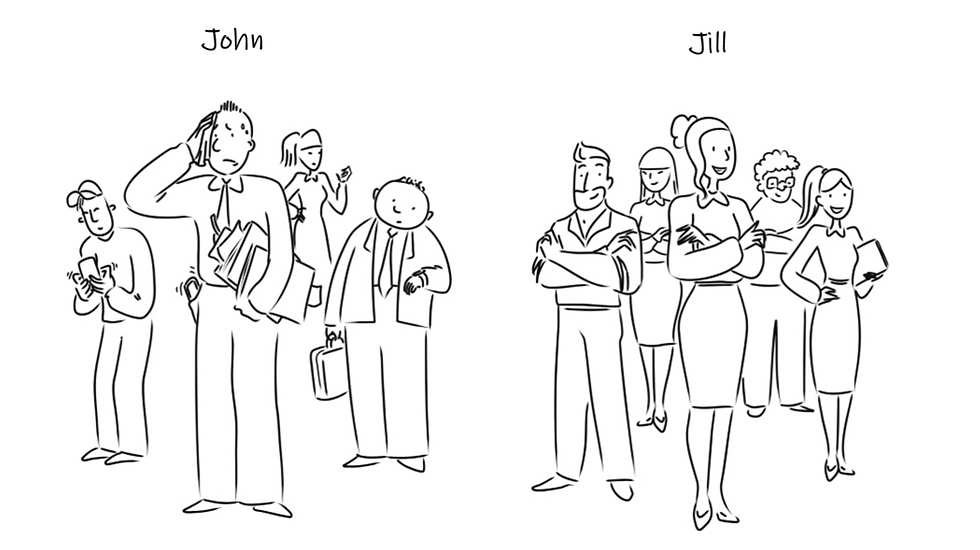
John operates in a high-pressure “Just F*****g Do It” environment. He keeps everything in his head. He pushes harder, demands late nights from his team because that’s what his stakeholders demand from him. He builds “slack” into estimates so his team members don’t get into trouble, and when things go wrong he feels the pressure himself. His projects run on caffeine, pizzas, adrenaline and grit.
Jill lives in an impactful world. She leads with trust, structure, and transparency. She uses clear processes to make sure the important things get done — not by controlling every detail, but by empowering her team to solve problems themselves. She escalates clearly, is listened to by her governance, makes trade-offs visible, drives the difficult decisions and keeps her energy focused where it counts.
Too many projects still run like John’s: firefighting, paperwork mountains, constant interruptions, a mad dash to the finish line. Over time, it erodes trust, destroys focus, and breaks people.
1. Transparency over heroics.
Jill names trade-offs before they become crises. She’s honest that time, scope, and cost require constant balancing. She forces stakeholders (governance) into making decisions rather than letting them leave all the pressure on the project team.
2. Focus energy where it matters.
She doesn’t let paperwork run the project. If a document doesn’t help deliver value, drive decisions, or reduce risk, it’s cut. By keeping things simple, she gives her team more time to solve real problems.
3. Build sustainable pace.
She leads by example, setting clear boundaries, trusting her team, and picking the right delivery approaches for the work they are doing. She works hard, but effectively and expects her team to do the same. Calling out when they need help and when prioritisation or decisions are required.
Being Impactful isn’t about working less hard. It’s about working more effectively and focussing on THE RIGHT THINGS!
I’ve shared the recording of the introduction of my audiobook, where I tell my story about stress and pressure and a psychotic episode 🤯 and unpack what makes the difference between stress and impact.

Comments